Residence Lower Parel
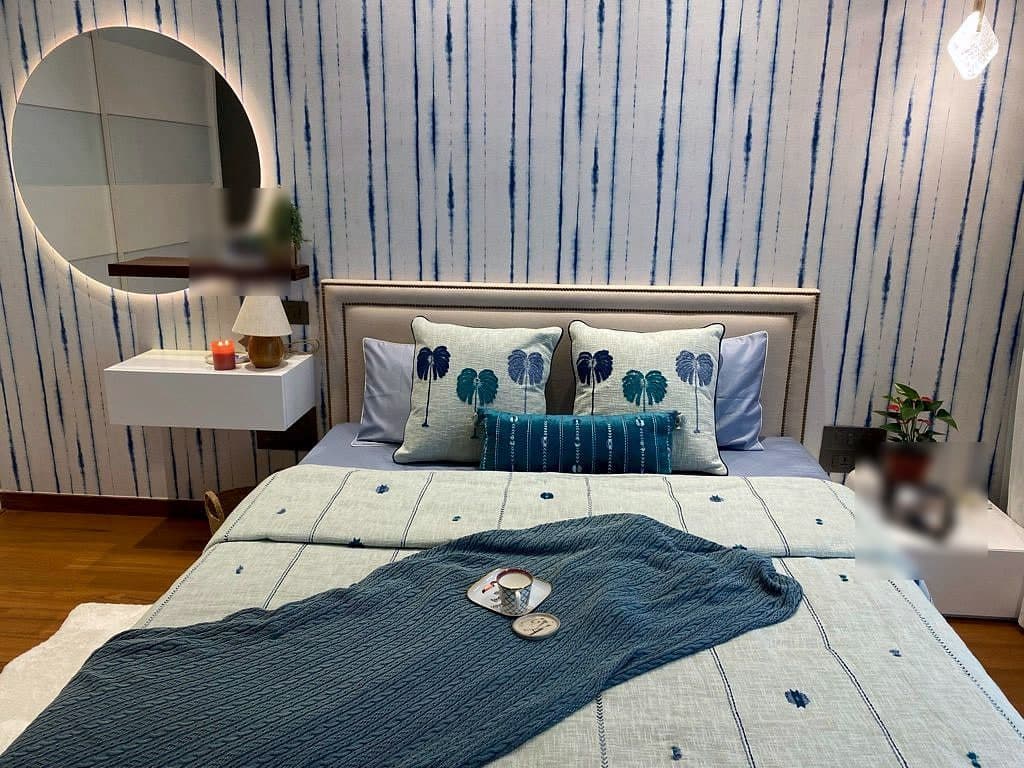
A bedroom worked out in indigo: one wall, one pendant, one door to the plants.
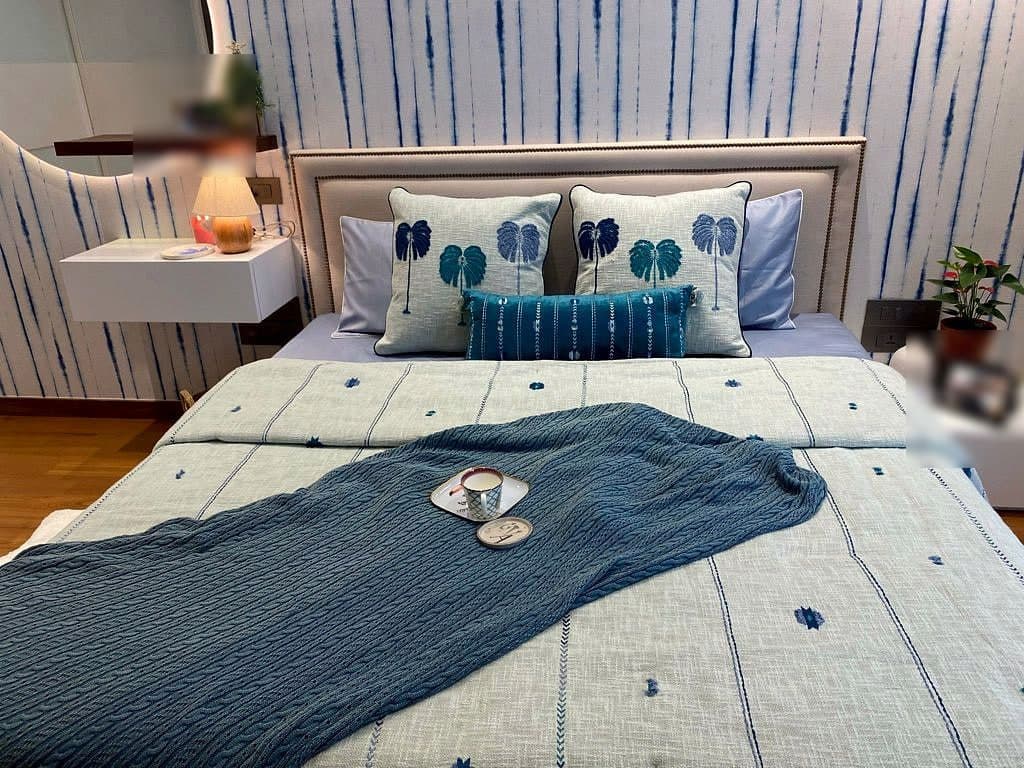
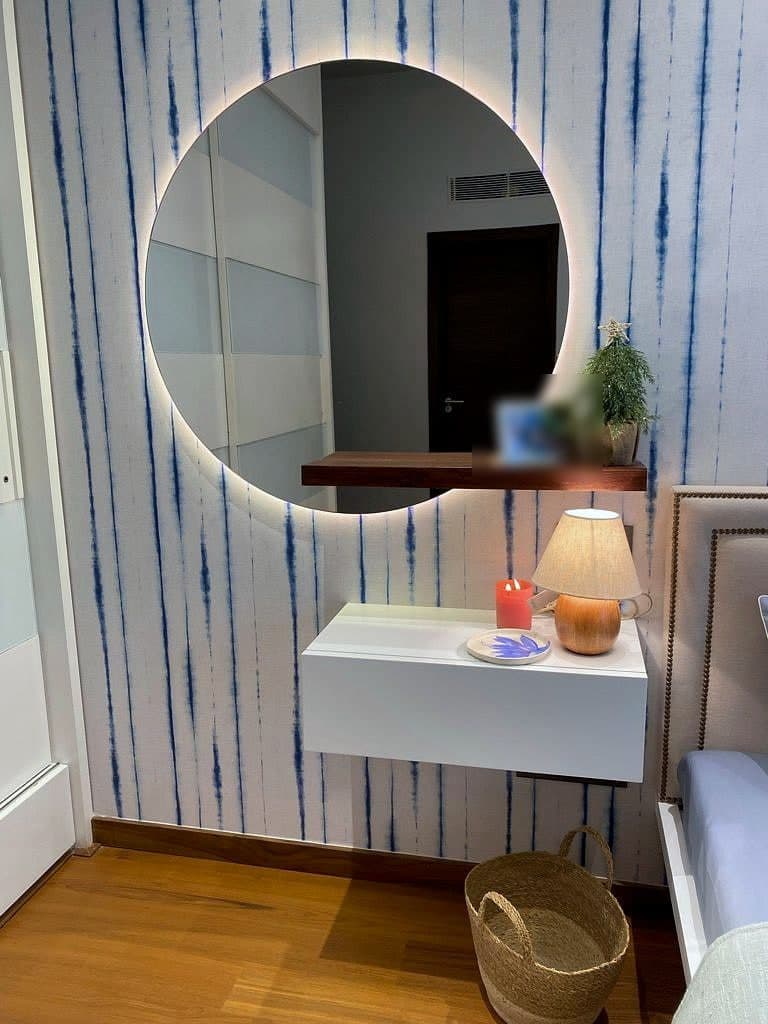
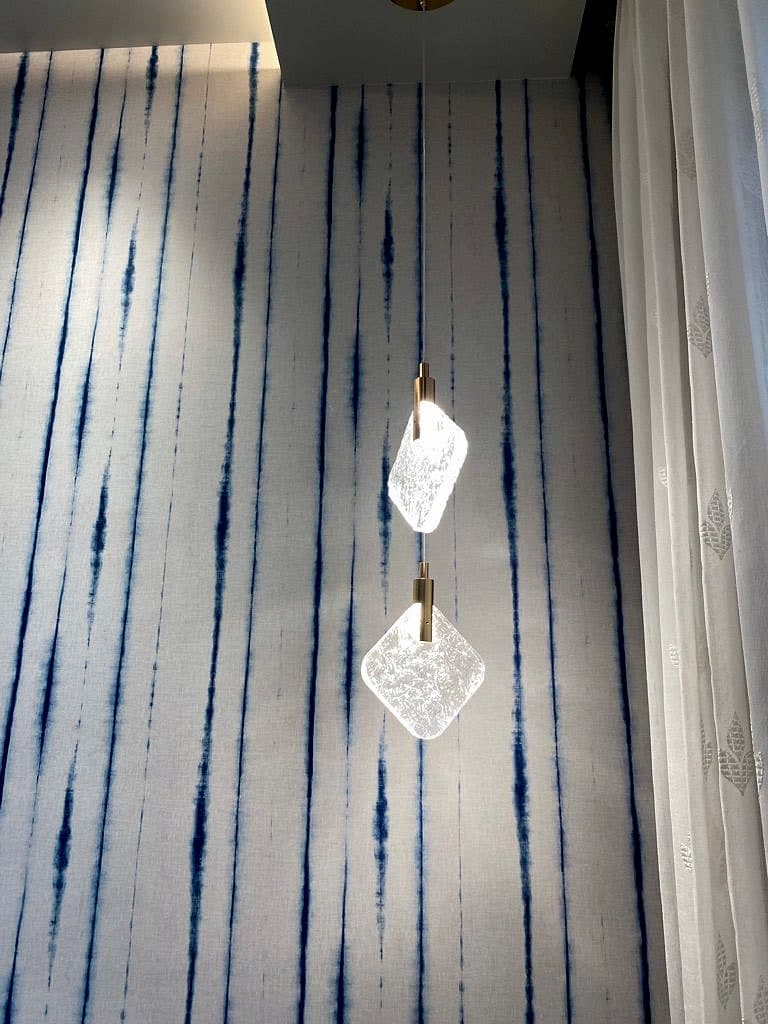
One bedroom, worked out in a single idea. Vertical indigo stripes are drawn on every wall in the room, hand-dyed rather than printed, so no two run the same way. Everything placed against them is white, pale timber or a flatter blue.
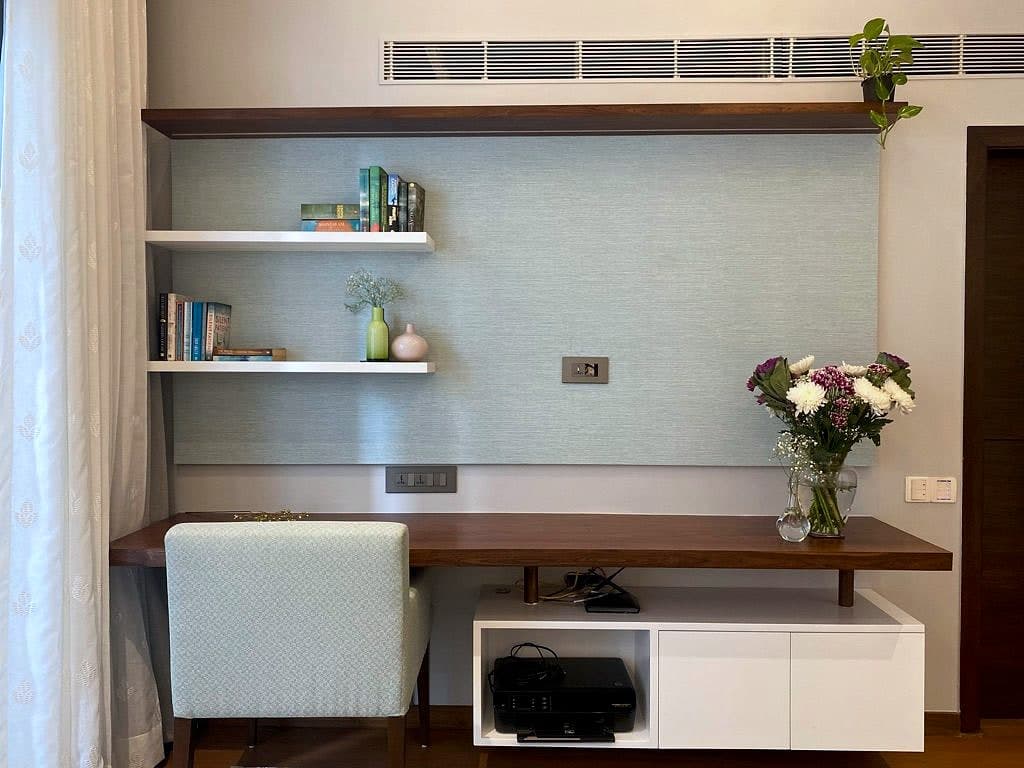
The room is small and the plan gives every function a wall of its own: the bed on one, a desk and shelves on another, a mirror and console on the third, and a glazed door to a planted balcony on the fourth.
Chapter 01
One pattern, and nothing competing with it
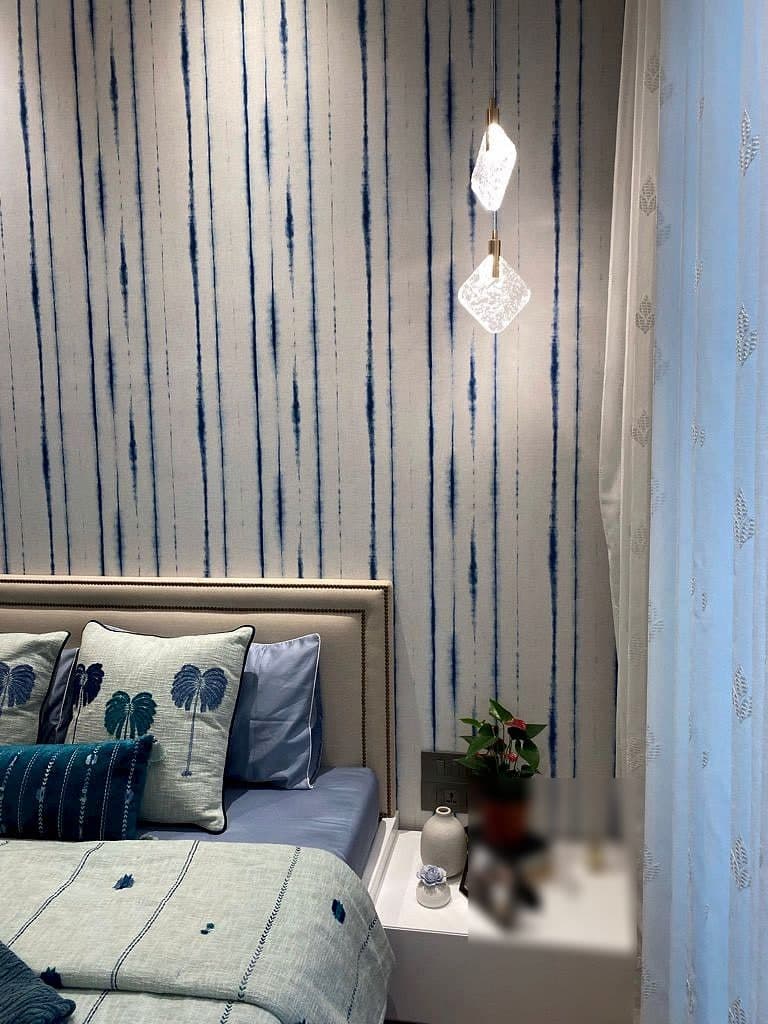
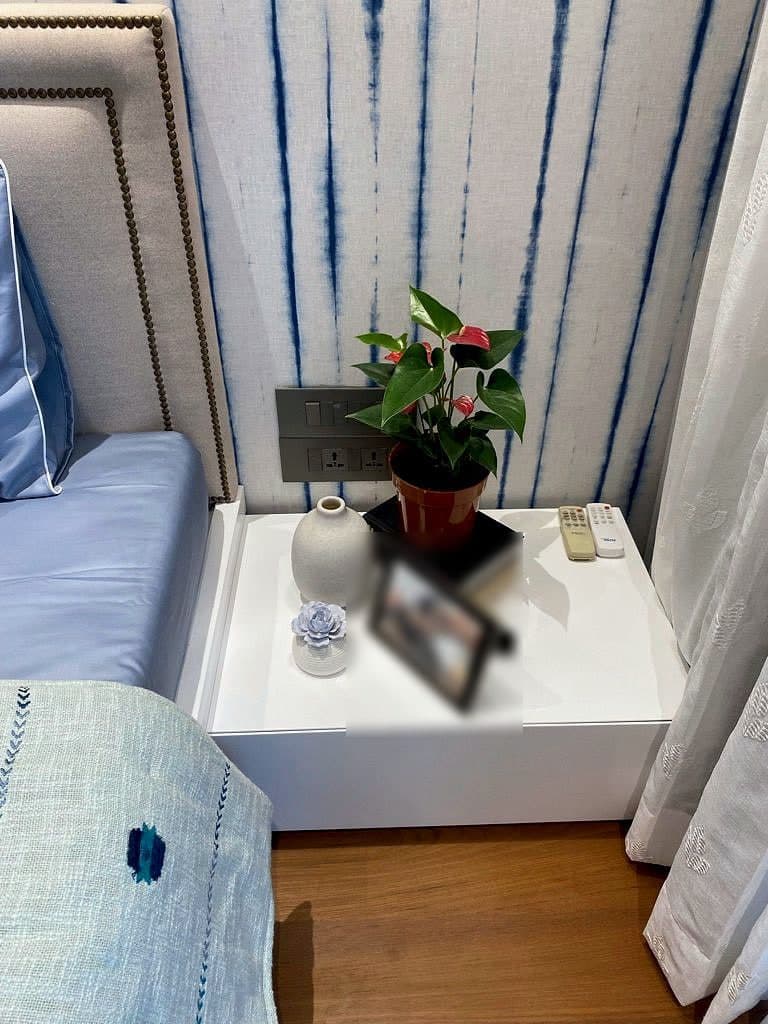
The stripes are the whole scheme. Because they run floor to ceiling on every wall, the room needs no other pattern to feel finished, so the bedding is plain, the cushions carry one small motif, and the joinery is flat white with no handles.
Two faceted glass pendants hang low beside the bed instead of table lamps, which keeps both bedside surfaces clear. That is the same decision as the handleless joinery, made twice.
Chapter 02
A door kept for the plants
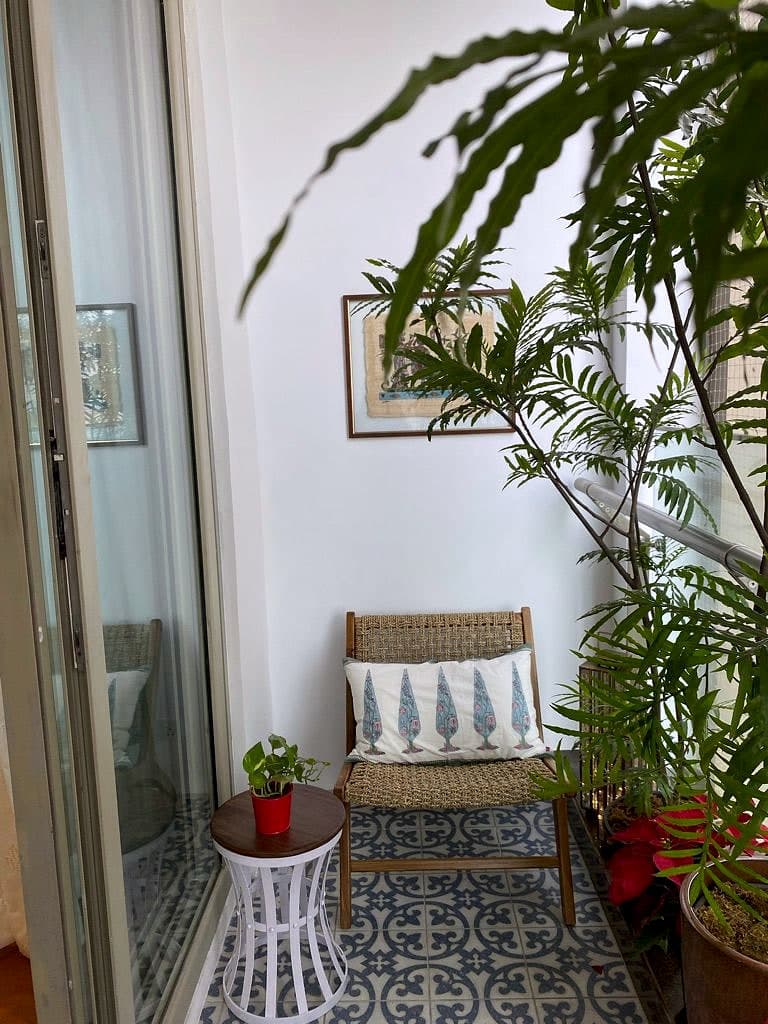
The balcony off the room is not treated as storage. It has a patterned tile floor, a cane chair, and enough planting to fill the glazed door, so the view from the bed ends in leaves rather than in a railing.
Materials
- Wallcovering
- Hand-dyed indigo stripe, floor to ceiling
- Joinery
- Handleless white cabinetry, teak desk shelf
- Lighting
- Faceted glass pendants, backlit round mirror
- Textiles
- Pale blue and white cotton, printed cushions
- Natural fibre
- Cane to the balcony seating
- Tile
- Patterned encaustic to the balcony floor
Architecture
Nothing structural was moved. The room works by giving each of its four walls a single job: sleep, work, dress, and the door out to the planting. A small floor plate never has to do two things at once.
A room that commits to one idea and then refuses to add a second, which is most of why it feels larger than it is.